
Your Game Doesn’t Need a Bigger UA Budget. It Needs Meme Market Fit.
Memes can be a real growth engine for your game.

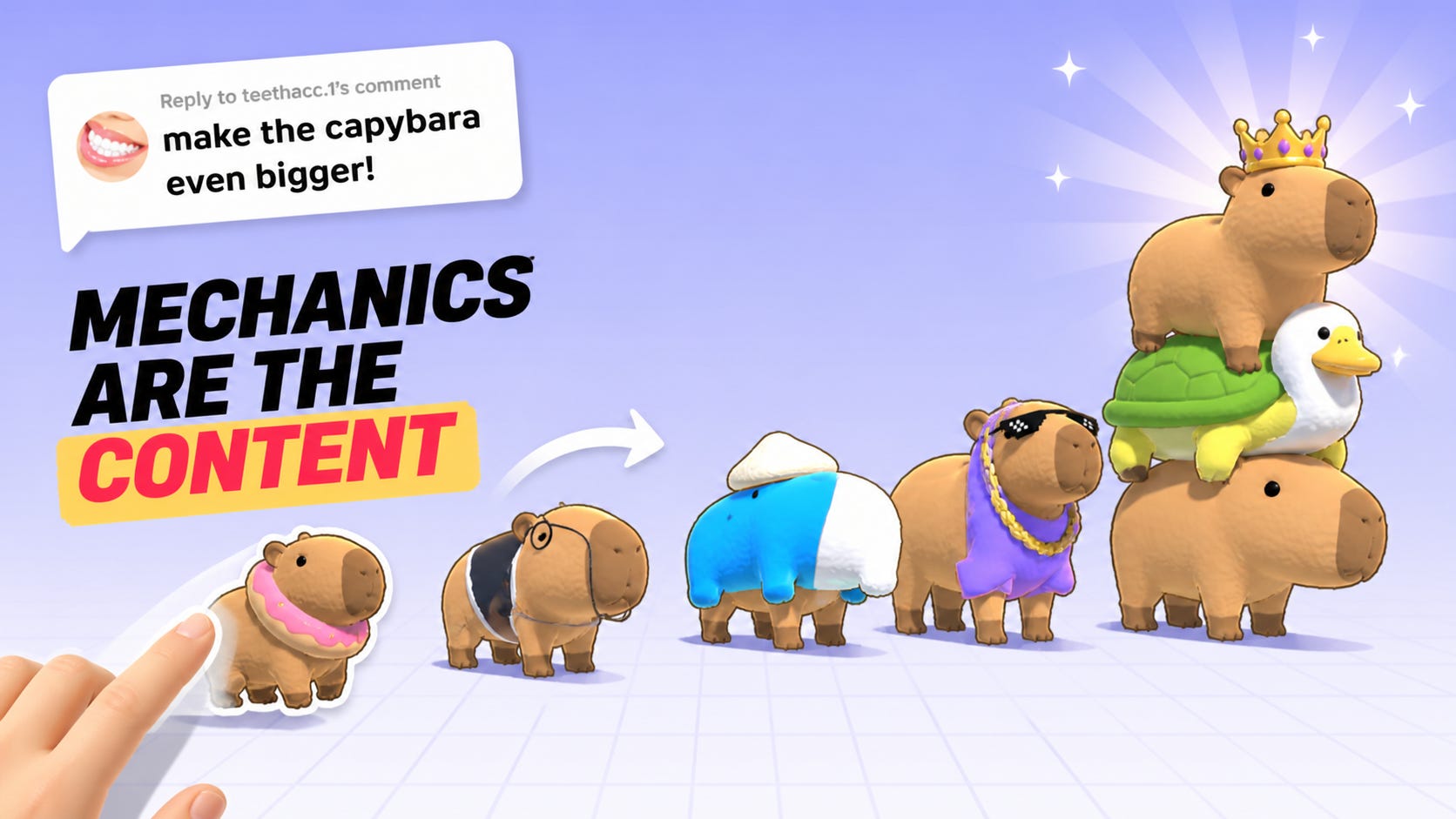
Historically, mobile success was based on product-market fit. Does the game retain? Do people understand the core loop? Is it possible to buy players, onboard them, and scale spending without burning money? This is all still true. A game without retention remains a leaky bucket. However, product-market fit is not the whole story anymore.
The next tier in the stack of mobile games is meme-market fit. Does your game create clips worth sharing, commenting on, remixing, arguing, and creating memes around? Is the game mechanic replicable as content? Not as an advertisement that pretends to be a part of the actual gameplay. It should work as standalone content that people might actually want to consume as part of their newsfeed.
TikTok has redefined marketability. Today, the mechanic can be an ad in its own right. Merging. Clawing. Stacking. Failing. Upgrading. Combining. Transforming. The mechanics themselves become the main hook. The need for a Hollywood-quality commercial or some kind of fake-choice add or massive budget on UA is no longer necessary. Sometimes, the best creative comes from the mechanics, which could be chaotic, funny, aesthetically pleasing or understandable within just three seconds.
VTheDev-style thinking
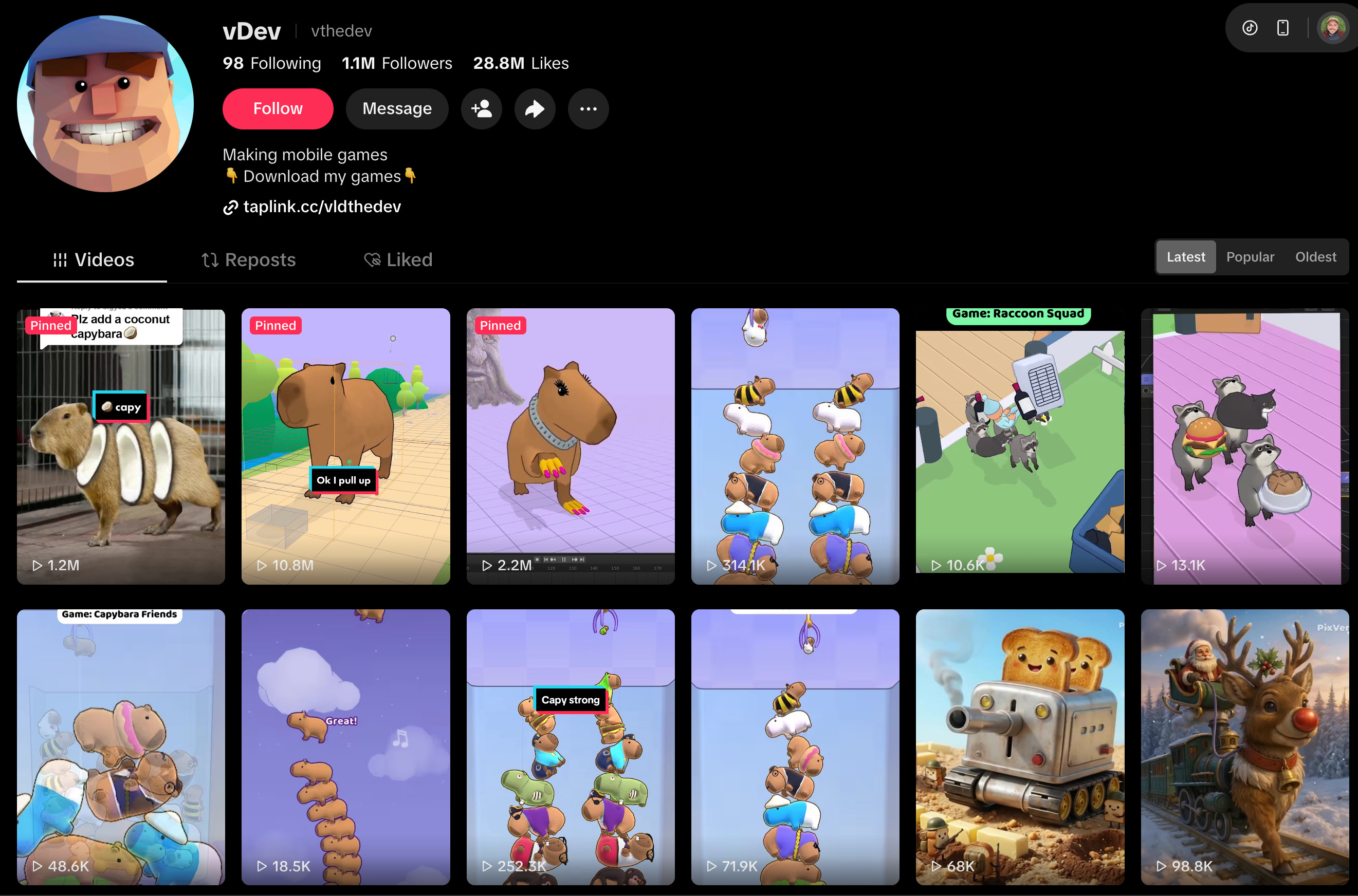
VTheDev is a good example of meme-market fit in action. The interesting bit is not just that he makes TikToks about games, but that he appears to build around what TikTok already wants to watch: claw machines, chaotic combinations, brainrot characters, capybaras, satisfying upgrades, and simple mechanics that make sense instantly. His Tiktok bio frames him simply as someone ‘making mobile games,’ while games like Brainrot Catcher show the wider trend clearly: take a familiar mechanic like a claw machine, wrap it in whatever internet culture is peaking that week, and suddenly the game itself becomes content.
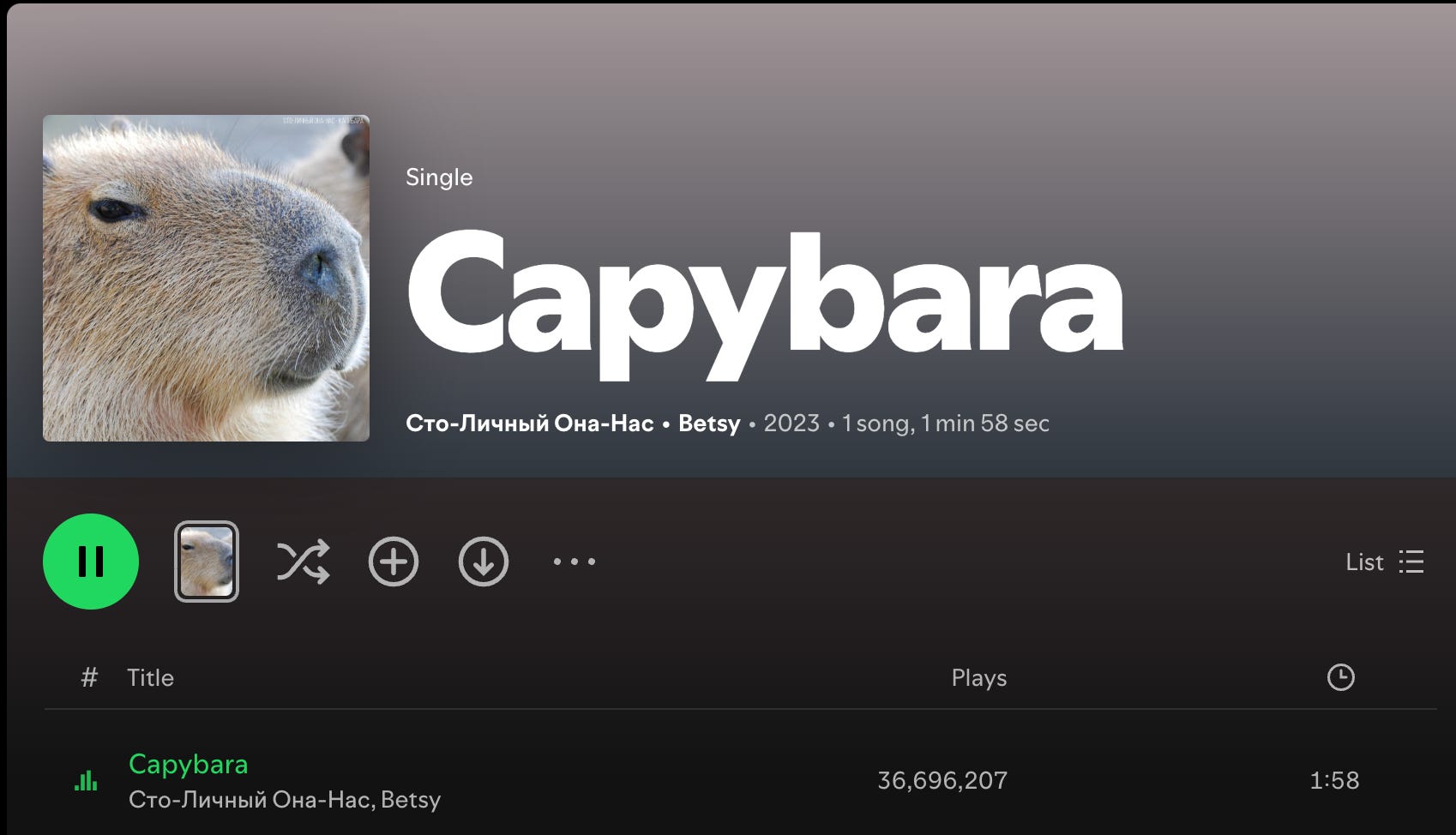
Capybaras have been mega-viral on Tiktok for awhile now thanks to the 2020 song OK I pull up / After Party Don Toliver meme (capybara riding in a car). That was then followed by “Chill Animal” Vibes in 2022 when it became a format not just an animal. Then the Capybara song dropped and cemented the Capybara in legendary Meme status.
The game is relatively simple… Capybara Rush is an endless runner where you play as a viral capybara, pulling up and sprinting through colorful levels. You dash, dodge, and collect treats while unlocking secret prizes along the way. It’s fast, light, and built around the chaotic, meme-driven energy that made capybaras blow up online.
Merge Fellas follows the same playbook, just with a different mechanic at the core.
The game is relatively simple… Merge Fellas is a combination game where you drop and merge characters to evolve them into bigger, weirder versions. Each merge escalates the chaos—what starts as something familiar quickly turns into absurd, meme-like creations. The loop is easy to understand instantly: combine, upgrade, repeat.
What makes it interesting is how closely it mirrors what already works on TikTok. The act of merging is inherently satisfying to watch - clean upgrades, unexpected outcomes, and a constant sense of “what does this turn into next?” It’s the same kind of visual payoff you get from stacking, claw machines, or idle upgrades. The mechanic is the content.
Instead of building a game and then figuring out how to advertise it, Merge Fellas feels like it starts from the opposite direction. Take a format people already enjoy watching-simple merges, escalating absurdity, quick dopamine hits-and wrap it in meme culture. The result is a game that doesn’t just play well, it clips well and can go viral on Tiktok creating you a free organic growth engine.
There are rules for meme-market fit.
There are rules for meme-market fit. This isn't a coincidence. It's not just luck that makes some games break through; they follow a pattern.
When a game has meme-market fit,
You can understand the main action in less than two seconds.
The result makes people feel funny, cursed, satisfied, chaotic, or surprised.
The mechanic can wear clothes from different cultures.
People who watch right away think, ‘I want to try that.’The content looks like it belongs on TikTok, not like an ad that pretends to be TikTok.
If you look at Merge Fellas, Capybara Rush, or anything else VTheDev makes, they all hit these.
The mechanic is easy. The reward comes right away. The wrapper is always changing.
The last part is the real key.
The mistake most studios make
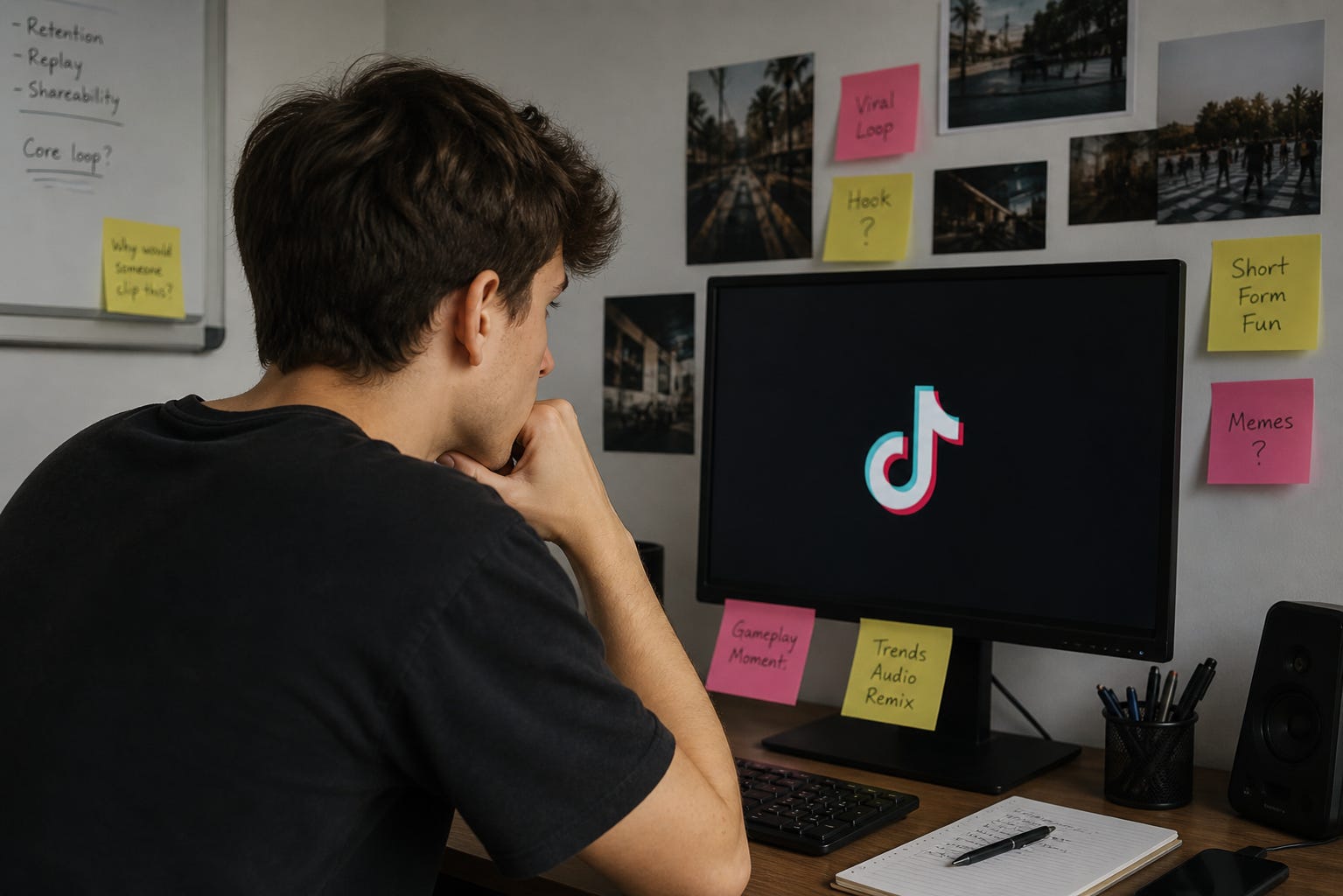
The majority of game studios make a common mistake by seeing memes purely as a marketing layer. Most studio production cycles have the following flow: Games get built, the roadmap solidified, the creative team gets handed a bunch of assets, and then someone eventually asks, “Can we make this work on TikTok?” All of these things occur in reverse order. Therefore, in order to achieve meme-market fit, games should be designed with ‘shareable surfaces’ from inception rather than forced into meme work, randomly dancing mascots, or trend-jacking for the sake of it. These shareable surfaces can include game-play mechanics that have no barriers to clipping, reactable game-play moments, characters can become memes/jokes, or systems that can mold into any trend that the internet is currently obsessed with. Therefore, the holy grail is having user created content that doesn’t feel like it was just piggybacking onto the original game, but rather that it was an organically occurring part of that game and wasn’t a separate phenomenon being appended onto it.
The takeaway
Meme-market fit is not about chasing every trend or slapping a viral character onto your game at the last minute.
It is about building games with mechanics that people immediately understand, want to watch, and feel tempted to share. The best examples do not need to explain themselves. You see the claw drop, the merge happen, the capybara run, or the weird character evolve, and your brain gets it instantly.
That is the real shift. In 2026, your game does not just need to retain players. It needs to create moments that travel without you paying for every impression.
Product-market fit keeps people in the game.
Meme-market fit gets them there in the first place.